
Sizing
What Size Dumpster Do I Need?
A Spartanburg operator's guide to picking the right dumpster size, from mill-village cleanouts to new construction off SC-9 and SC-296.
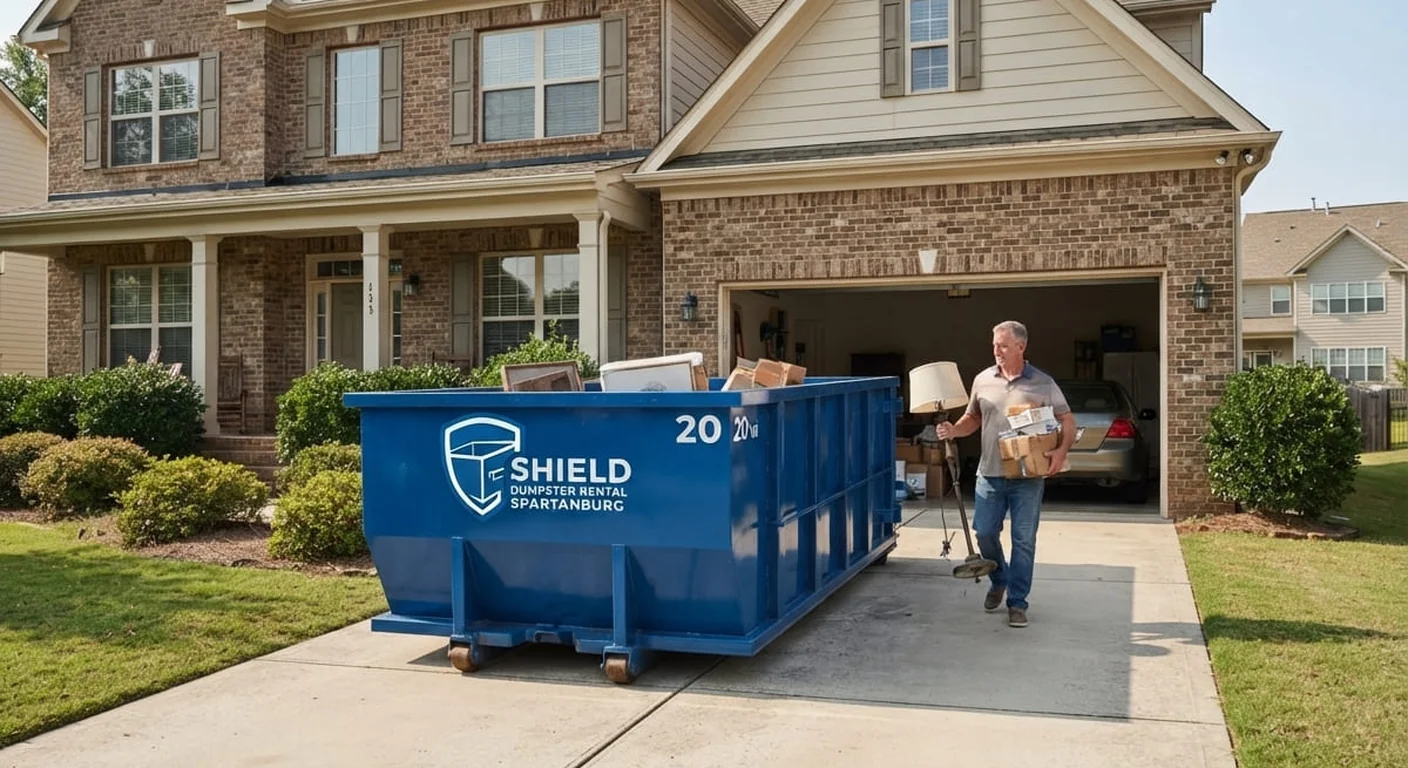
The question we hear more than any other, whether the caller is standing in a driveway on a mill-village street or walking a new-construction lot off SC-296, is simple: what size dumpster do I actually need? Guess too small and you're calling us back mid-project for a second container. Guess too big and you've paid for space you never filled. After years of dropping roll-offs across Spartanburg's mill villages, new subdivisions, and rural properties toward Woodruff and Pacolet, we've got a pretty reliable feel for which size fits which job. This guide walks through all five of our sizes — 10, 15, 20, 30, and 40 yard — with real examples pulled from the kinds of projects we roll onto every week.
The Five Sizes at a Glance
Before we get into specific Upstate project types, here's how the lineup stacks up side by side. We size every drop-off around your specific job when you call us at (864) 754-6073, but this table is a solid starting point.
| Size | Best For | Typical Load | Footprint | Common Upstate Use |
|---|---|---|---|---|
| 10 Yard | Small cleanouts, single-room projects | ~3 pickup truck loads | Compact, fits tight driveways | Mill-village bungalow cleanout, small bathroom remodel |
| 15 Yard | Medium cleanouts, small remodels | ~4.5 pickup truck loads | Still driveway-friendly | Flooring tear-out, garage cleanout, deck removal |
| 20 Yard | Larger renovations, roofing, small demo | ~6 pickup truck loads | Moderate, needs a bit more clearance | Roofing tear-off, garage or shed demolition |
| 30 Yard | New construction, whole-home projects | ~9 pickup truck loads | Larger footprint, best on job sites or wide driveways | New builds off SC-9 and SC-296, whole-house remodel |
| 40 Yard | Major demolition, full estate cleanouts | ~12 pickup truck loads | Largest, needs open space to place and load | Estate cleanout, full home demolition, large commercial jobs |
10-Yard Dumpster: The Mill-Village Bungalow Cleanout
The 10-yard is our smallest roll-off, and it's the one we drop most often in Spartanburg's older mill-village neighborhoods — Drayton, Whitney, Beaumont, Saxon, Arcadia, and Fairforest all still have plenty of the original bungalow housing stock, and those homes tend to generate cleanout jobs that are bigger than a truck bed but smaller than a full house gut. A single-bedroom cleanout, a small bathroom renovation, or clearing out a detached storage shed behind one of these older lots is a textbook 10-yard job. It slides into a narrow mill-village driveway without a fuss, and because these lots often sit close to the street, the compact footprint matters as much as the volume it holds.
We'd steer you toward a 10-yard if you're handling a single room, a small stretch of old flooring, or general household clutter that's accumulated in one of these older homes. If you're not sure whether your project fits, our 10-yard dumpster page has more detail, or just call and describe the job.
15-Yard Dumpster: The In-Between Workhorse
The 15-yard is the size we recommend when a job is clearly bigger than a single room but doesn't call for a full construction container. Think a kitchen or bathroom remodel with cabinets, tile, and old fixtures coming out together, a deck or fence removal, or a garage cleanout where furniture, boxes, and yard equipment have piled up over a few years. It's still narrow enough to place on most residential driveways around Spartanburg, and it gives you enough room that you're not second-guessing every load you toss in.
Homeowners in newer neighborhoods off SC-9 and SC-296 near Boiling Springs and Moore often reach for a 15-yard when they're doing a mid-size remodel rather than a ground-up build. Details are on our 15-yard dumpster page.
20-Yard Dumpster: Roofing Tear-Offs and Small Demolition
This is the size that comes up constantly with roofing contractors and homeowners tackling a garage or shed teardown. A standard asphalt shingle tear-off on an average Spartanburg-area roof — especially the steeper rooflines common on older Hub City homes — produces a surprising amount of weight and bulk once the old shingles, felt, and flashing all come off. A 20-yard container gives roofing crews the capacity to load a full tear-off without running out of room mid-job, and it's the size we point most roofers toward as a default. If your project involves layers of old shingles or a roof that's been re-covered more than once, size up before you start rather than after.
The 20-yard also handles detached garage or shed demolition well. We've dropped plenty of these behind older homes in Arcadia and Saxon where a leaning storage building or a garage with a failing roof needed to come down before a new one went up. Between the framing lumber, old siding, and roofing material, a 20-yard usually clears it in one trip. See our 20-yard dumpster page and roofing dumpster rental page for more on how we size these jobs, and our roofing tear-off sizing guide if shingles are the main material you're dealing with.
A note on demolition debris
Garage and shed teardowns fall under general demolition debris, and if your project is closer to a full structure coming down rather than just a small outbuilding, it's worth reading through our demolition debris page before you commit to a size — the difference between a 20-yard and a 30-yard often comes down to whether there's a concrete slab or foundation work involved too.
30-Yard Dumpster: New Construction Off SC-9 and SC-296
The corridors along SC-9 and SC-296 heading toward Boiling Springs and Moore have seen a steady run of new-construction subdivisions, and the 30-yard is the size we deliver most often to those job sites. New-home builds generate a constant stream of packaging, scrap lumber, drywall offcuts, and general construction debris from the time the framing goes up until final trim work wraps. A 30-yard gives a construction crew enough capacity to go days between swaps rather than calling for a new container every time the framing crew clears a stage of the build.
This size also fits whole-house remodels and additions well, where you're pulling out old drywall, flooring, and fixtures across multiple rooms at once rather than one room at a time. It needs a bit more room to place than our smaller containers, so on active job sites we usually talk through exactly where it'll sit before delivery day. Our construction dumpster rental page and 30-yard dumpster page go into more detail on typical build-site sizing.
40-Yard Dumpster: Estate Cleanouts and Major Demolition
Our largest roll-off is the one we bring out for full estate cleanouts — the kind of job where a family is clearing out a longtime family home, often a farmhouse toward Woodruff or Pacolet or an older property closer to town, and every room, closet, attic, and outbuilding needs to be emptied at once. Furniture, appliances, decades of household belongings, and sometimes contents from a detached garage or barn all come out over the course of a weekend or a week, and a 40-yard keeps the whole job to a single container instead of juggling multiple swaps while a family is already dealing with an emotional process.
The 40-yard is also our go-to for full home demolition and larger commercial cleanouts, where volume outpaces almost everything else on this list. It needs open, level space to place and load safely, so we'll always confirm the site layout with you first. If you're planning an estate cleanout, our estate cleanout page and estate cleanout checklist walk through how to plan the work in stages, and our 40-yard dumpster page covers the container itself.
Weight vs. Volume: Why Two Similar-Looking Jobs Can Need Different Sizes
One thing that trips up a lot of first-time renters is assuming size is only about how much space debris takes up. In practice, weight matters just as much as volume, and it's one of the biggest reasons two jobs that look alike on paper end up needing different containers. A 20-yard full of couch cushions, cardboard, and old carpet padding weighs a fraction of a 20-yard full of roofing shingles or broken concrete. Dense materials like shingles, tile, brick, and concrete fill the practical capacity of a container long before they fill the visible space, while bulky-but-light materials like furniture and yard waste do the opposite.
This matters most for jobs involving concrete, brick, or masonry — a driveway tear-out, an old patio slab, or foundation debris from a garage demolition. Those projects almost always deserve a dedicated look rather than folding heavy material in with everything else, and our concrete and heavy debris page walks through how we handle that. If your project mixes light household items with something dense like tile or masonry, mention both when you call so we don't undersize the container for the weight it'll actually carry.
Seasonal Timing Around the Upstate
The Upstate's climate shapes a few sizing decisions too. We don't deal with the heavy snow loads or spring thaw weight restrictions that roll-off companies further north plan around, but our winters bring occasional ice storms that can down tree limbs and damage roofs, and our summers bring heat and thunderstorms strong enough to do the same. After an ice storm, we often see a run on 15-yard and 20-yard containers for storm cleanup and downed-limb removal across the county. After a summer storm damages a roof, that's frequently when a roofing tear-off and a 20-yard container get booked together. Knowing the season your project falls in helps us anticipate demand and get a container to your property in Boiling Springs, Duncan, Inman, Moore, Roebuck, Wellford, Lyman, Woodruff, Chesnee, or Pacolet without a long wait.
How We Help You Choose
Every one of these examples is a starting point, not a strict rule — the honest answer to "what size do I need" almost always depends on details specific to your property and your project. A few things we ask about on every call:
- What's actually going in it? Shingles and concrete are heavy and dense; furniture and yard clippings take up volume without the same weight. The mix changes which size makes sense even for similar-looking jobs.
- Where will it sit? A tight mill-village driveway in Beaumont or Whitney can rule out our largest containers, while an open lot off SC-296 can handle anything we bring.
- How many rooms, stages, or structures are involved? A single-room cleanout and a whole-home estate cleanout both start with "we need to clear this house," but they land on opposite ends of our size range.
- Is it a one-day job or a multi-week build? Construction sites often benefit from sizing up so the crew isn't waiting on swaps between framing and finish work.
We size roll-offs across Spartanburg and the surrounding Upstate — Boiling Springs, Duncan, Inman, Moore, Roebuck, Wellford, Lyman, Woodruff, Chesnee, and Pacolet — every week, and one flat rate covers delivery, pickup, and disposal no matter which size you land on. If you're still unsure after reading through this guide, that's exactly what a quick call is for.
When in Doubt, Call Before You Book
We'd rather talk through your project for two minutes than have you guess wrong and pay for a second delivery. Describe what you're clearing — a bungalow cleanout in an older mill village, a roofing tear-off, a garage or shed demolition, a new-construction site off SC-9, or a full estate cleanout — and we'll match it to the right container the first time. Call us at (864) 754-6073 and we'll size it together, or browse our full dumpster sizes page and services page for more on how each size pairs with the type of work you're doing. If your project involves placing a container in a public right-of-way rather than a private driveway, it's also worth a quick check of local permit rules before delivery day, which we cover in our Spartanburg permits guide.
Need a container in Spartanburg or anywhere in Spartanburg County? Call (864) 754-6073 and describe the job. We will name the size, the flat rate and a delivery slot — often the same day. No forms, no waiting on an email.