
Contractors
C&D Debris Disposal in Spartanburg
How Spartanburg builders size, schedule and place dumpsters for framing, rough-in and finish debris without stalling the job. Call (864) 754-6073.
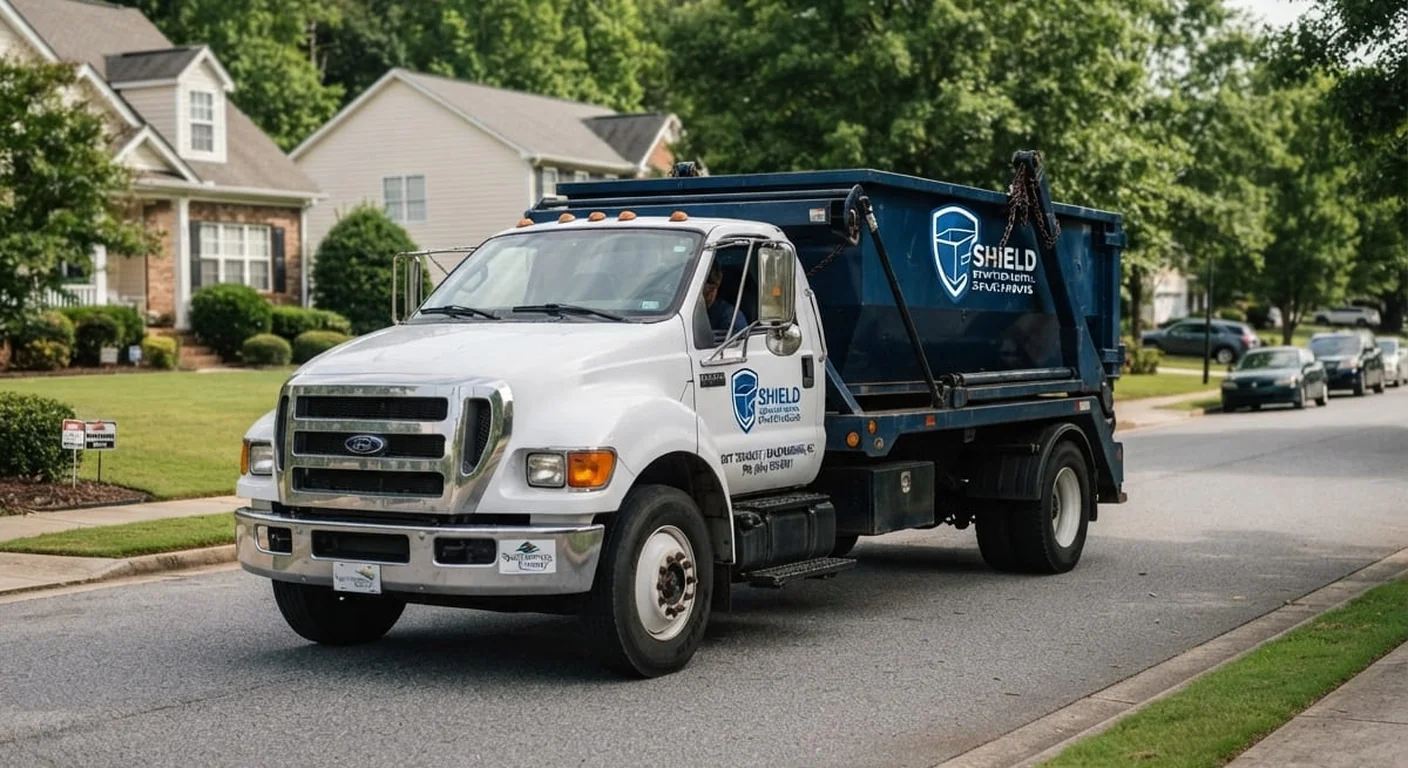
Every framing crew, remodeler and demolition contractor working the Upstate learns the same lesson eventually: a job site doesn't produce one kind of trash, it produces three or four completely different kinds at three or four completely different times. The debris pile at framing looks nothing like the pile at rough-in, and neither one looks anything like what comes off the site during finish work. Sizing a dumpster once and hoping it covers the whole build is how sites end up with debris stacked against the fence line, subs tripping over scrap, and a truck that can't get back in the driveway. We size and schedule for construction and demolition (C&D) debris every week across Spartanburg County, and the crews that run the smoothest jobs are the ones who plan the dumpster the same way they plan the framing package or the rough-in inspection — phase by phase, not as an afterthought.
That planning matters more than ever with how much new building is happening out this way. New subdivisions keep pushing out along SC-9 and SC-296 toward Boiling Springs and Moore, and infill remodel and teardown work keeps stacking up in the older mill-village neighborhoods closer to downtown. Whether you're framing a slab on a new lot or gutting a bungalow in one of the older neighborhoods, the same phase-by-phase approach to debris keeps the site moving instead of stalling.
Why a C&D Site Isn't a Cleanout
A homeowner clearing out a garage or an estate fills a dumpster with a fairly even mix of light household material. A construction or demolition site doesn't work that way. The material changes character completely from one phase to the next — light and bulky one week, dense and heavy the next — and the volume shows up in bursts tied to inspections and sub schedules rather than a steady daily trickle. Size the container for "the job" instead of for the specific phase happening in front of you, and you'll either pay to haul mostly empty air on the heavy phases or run out of room and stall the crew on the bulky ones.
Our construction dumpster rental service exists because of exactly this pattern. We'd rather talk through your framing package, your demo scope and your finish schedule up front than swap you into the wrong container mid-job.
Sizing for the Three Phases of a Build
Most residential and light-commercial jobs move through three debris phases that behave very differently. Treat each one on its own terms.
Framing & Structural Phase
This phase produces high-volume, low-density waste: dimensional lumber offcuts, OSB and plywood scrap, packaging, banding, and the odd damaged truss or stud. It fills a container fast by volume but rarely comes close to a weight limit. A 30-yard or 40-yard roll-off is usually the right call here, especially on a new build off SC-9 or SC-296 where the framing package for a full house comes off in a matter of days.
Rough-In & Demolition Phase
Rough-in mixes lighter electrical and plumbing packaging offcuts with heavier interior demolition debris if you're gutting an existing structure — old plaster, lath, cabinetry, flooring. This is the phase where weight creeps up faster than volume, particularly on remodels of the older mill-village housing stock with plaster-and-lath walls instead of drywall. A mid-size to large container, and a shorter fill window before swap-out, keeps this phase from surprising you on weight.
Finish & Punch-Out Phase
Finish debris — drywall trim scraps, flooring cutoffs, cabinet and fixture packaging, paint cans set aside for proper disposal elsewhere — is lower volume but often denser per item than framing scrap. A smaller container run over a longer window, or a final quick swap right before the punch list closes out, usually covers it without leaving an oversized box sitting mostly empty for the last two weeks of the job.
If you're not sure which phase you're sizing for, our general sizing guide walks through the same logic for non-construction jobs, and our team will size a specific phase over the phone at (864) 754-6073 faster than any guide can.
Weight vs. Volume: The Trap That Catches Every Crew Eventually
The single most common mistake on a C&D site is sizing by "how big a pile does this look like" instead of "how heavy is this specific material." Volume and weight are not the same problem, and different debris types break the relationship in opposite directions. A container that looks half-empty by volume can already be at its practical weight limit, and a container that's visibly full of light material may barely register on the scale.
| Material | Volume Behavior | Weight Behavior | Sizing Note |
|---|---|---|---|
| Drywall & plaster | Stacks flat, moderate volume per sheet | Deceptively heavy, especially wet or double-layered | Don't judge fill level by eye alone — weight limits hit before the bin looks full |
| Roofing shingles | Compact, low volume for the weight | Very heavy per square, especially with multiple tear-off layers | Often needs a dedicated container separate from framing debris — see our roofing tear-off sizing guide |
| Concrete, brick & masonry | Low volume relative to weight | Extremely heavy — a small pile can max out a standard container | Best handled through our concrete & heavy debris service, sized specifically for dense material |
| Framing lumber & OSB scrap | High volume, fills fast | Light relative to volume | Volume-driven sizing works fine here; weight is rarely the limiting factor |
| Mixed demolition debris | Unpredictable, varies by structure age | Unpredictable — older lath-and-plaster runs heavier than newer drywall | Talk through the structure with us before the container drops — see demolition debris removal |
The practical rule we give every crew: if the material is dense — concrete, brick, tile, shingles, wet drywall — size and load for weight, not for how much empty space is left in the box. Mixing a heavy load like concrete or shingles in with a full load of framing scrap is the fastest way to overload a container that still looks half-empty. Keep dense material separated into its own container whenever the job allows it.
Scheduling Swap-Outs So the Site Never Stalls
A dumpster that's full and waiting for pickup is the same as a dumpster that isn't there — either way, the next sub can't unload debris and the site backs up. The standard rental period gives you a full week per container, and extensions are available if a phase runs long, but the crews that never lose a day plan their swap-outs around the schedule instead of waiting until the box is overflowing.
- Book the framing container to land the day demo or the framing package starts, not after debris has already started piling up on the ground.
- Call for a swap a day or two before you expect the container to top out, not the morning of — same-day service helps when a phase runs ahead of schedule, but it's a backstop, not the plan.
- Stagger swap-outs around inspections so a full container isn't sitting in the driveway or blocking access when the inspector shows up.
- Order a second, separate container for heavy material — concrete, brick, roofing — instead of trying to time one box to handle both light and dense debris in the same week.
Our same-day dumpster rental and roll-off rental services are built around exactly this kind of mid-job flexibility, and one call to (864) 754-6073 gets a swap on the schedule instead of a site sitting idle.
Placement and Site Safety Basics
Where the container sits matters as much as what size it is. A few basics we walk every crew through on a job site drop:
- Keep it on stable, level ground — a loaded roll-off is heavy, and soft or sloped ground on a graded lot can shift under it.
- Leave clear access for the truck — on an active build, that usually means keeping the container off the path other trucks and equipment need to use for deliveries and concrete pours.
- Load below the rim — an overloaded container isn't safe to transport and can't legally be hauled once material is stacked above the top edge.
- Keep dense material low and centered in the container rather than piled to one side, especially with concrete, brick or roofing.
- Fence or barrier the container on active sites with foot traffic, and keep it a safe distance from open trenches, temporary power, and excavation equipment.
- Confirm placement rules for the location — a container on private property is generally straightforward, but placement on a public street may need a temporary permit; check with the City of Spartanburg or Spartanburg County before you commit to a curbside drop. Our permit guide covers the details.
Before Any Excavation or Footings, Call 811
If the job involves breaking ground — footings, a demolition that includes foundation removal, grading for a new driveway pad, or trenching for utilities — get underground lines located before anything is dug, including before a dumpster pad is graded near a planned excavation. SC811 is South Carolina's free call-before-you-dig service, and it's a straightforward call to make before equipment moves. It has nothing to do with sizing your dumpster, but skipping it is the one mistake on a job site that can shut a project down entirely, not just slow it for a day.
The U.S. EPA also publishes solid, practical guidance on managing construction and demolition materials responsibly — separating recoverable material like clean wood, metal and concrete where a job allows it, and handling the rest properly. It's worth a look for any crew thinking through waste planning on a larger build; see the EPA's sustainable management of construction and demolition materials guidance.
Building the Plan for Your Job
Every build is a little different — a slab-on-grade new build off SC-9 has a different debris rhythm than a plaster-and-lath remodel in one of the mill-village neighborhoods, and a straight demolition tear-down doesn't behave like either one. What doesn't change is the value of thinking through the phases before the first container lands. Tell us the scope, the rough timeline, and what the structure is made of, and we'll size and schedule the swap-outs around it so the site keeps moving from framing through punch-out.
Call (864) 754-6073 to talk through your job's phases and get a container schedule built around your timeline, not the other way around. We deliver, we swap out, and we haul it — flat rate, no surprises on the invoice.
Need a container in Spartanburg or anywhere in Spartanburg County? Call (864) 754-6073 and describe the job. We will name the size, the flat rate and a delivery slot — often the same day. No forms, no waiting on an email.