Permits & Placement
Dumpster Permits in Spartanburg, SC
Learn when a Spartanburg dumpster rental needs a permit, how city, county and town rules differ, and how to place a roll-off safely and legally.
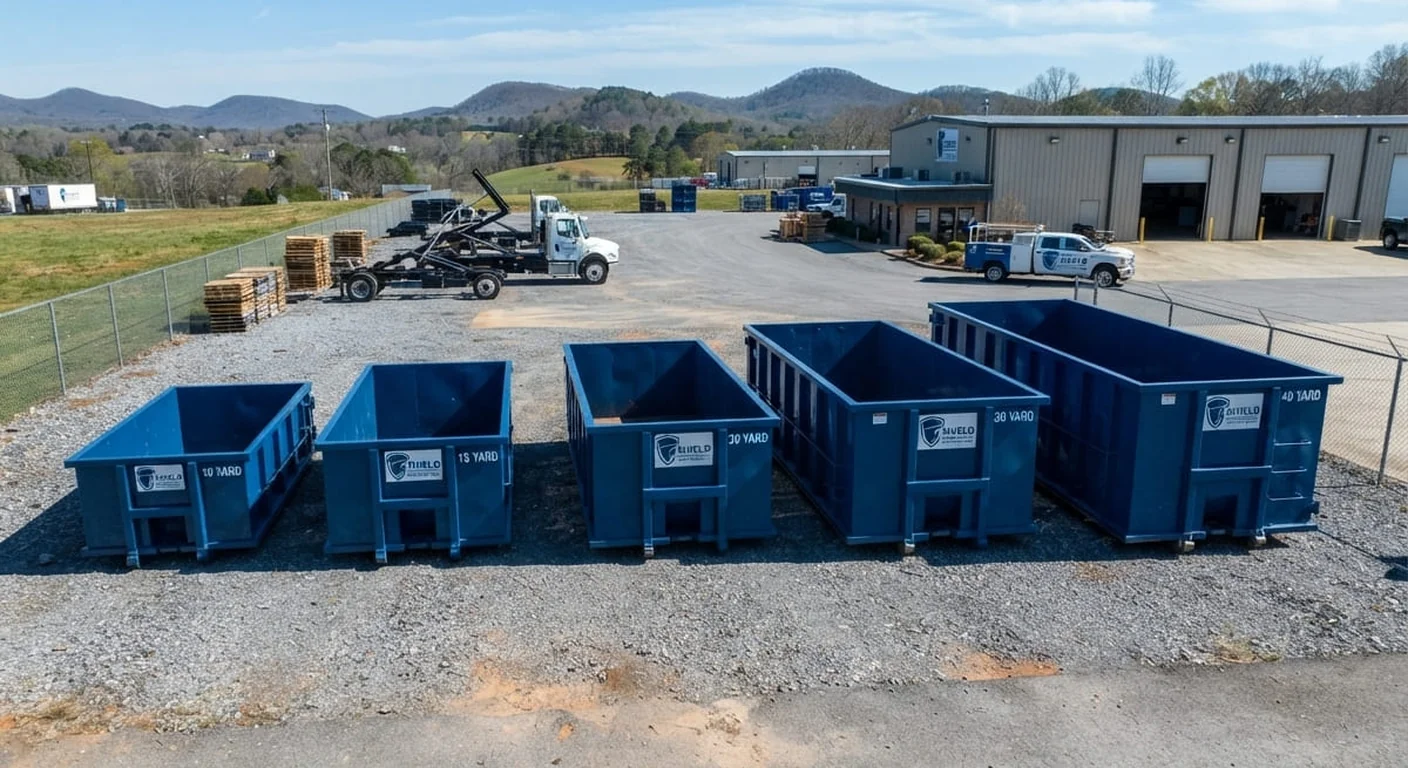
One of the first questions we hear when someone books a roll-off with us is some version of "wait, do I need a permit for this?" It's a fair question, and the honest answer is: usually not, but sometimes yes, and it depends entirely on where the dumpster actually sits once we drop it. We've delivered containers all over the Upstate — driveways in Boiling Springs, job sites in Duncan, curbside placements near downtown Spartanburg — and the permit question comes down to one simple line: private property or public right-of-way.
This guide walks through exactly how that line works, how permitting differs between the City of Spartanburg, unincorporated Spartanburg County, and the smaller incorporated towns nearby, plus the practical placement details — driveway access, street clearance, utility locates — that matter just as much as any permit paperwork. If you'd rather skip the reading and just ask us directly, call (864) 754-6073 and we'll tell you in two minutes whether your specific spot needs anything extra.
The Basic Rule: Private Property vs. Public Street
Every jurisdiction in the Upstate draws the same fundamental distinction, even if the specific forms and fees differ. A dumpster sitting entirely on land you own or control — your driveway, your yard, a contractor's staging area on a job site, a business parking lot — is treated as your business. You're not blocking anyone's travel lane, you're not occupying land the public relies on, and no local government needs to sign off before we drop it.
The moment a container needs to sit on a public street, in the road right-of-way, on a curb strip, or on a sidewalk, it becomes a different situation. That space belongs to the public, and the municipality or county that maintains that road generally wants to know a large steel box is going to be sitting on it — partly for liability reasons, partly for traffic and pedestrian safety, and partly so emergency vehicles and street sweepers aren't caught off guard.
This is exactly the same logic that applies in almost every city and county in the country, and it's the reason we always ask two questions before we finalize a delivery: where on the property is this going, and is there any chance it needs to touch the street or curb to fit?
When You're in the Clear: Private Property Placement
For the large majority of residential and commercial jobs we run — cleanouts, roofing tear-offs, renovation debris, yard waste hauls — the dumpster sits on a driveway, a side yard, or a parking area the whole rental period. No permit is required in these cases. That covers:
- A driveway placement at a single-family home in Boiling Springs, Moore, or Roebuck
- A construction site laydown area where the container sits inside the property line
- A commercial parking lot placement for a remodel or tenant buildout
- A rural or farm property placement off a gravel drive toward Woodruff or Pacolet
The only real requirement on private property is that the ground can handle the weight and the container stays accessible for our driver. We cover practical setup — plywood under the wheels, clearance for the truck, keeping debris below the rim — in our driveway protection guide, and we walk through picking the right container in our sizing guide. Neither of those steps involves any government office. If the whole job stays on your land, you can book and forget the permit question entirely.
When a Permit Comes Into Play: Public Street and Right-of-Way
Permits become relevant when there simply isn't room on the property — a tight lot downtown, a narrow driveway already full of equipment, a townhome with no yard to speak of — and the only workable spot is along the curb or partly in the street. In that scenario, the local government that owns the road generally wants a temporary placement permit before the container goes down.
What that permit typically covers, across most municipalities in South Carolina, is straightforward: how long the container can stay in the right-of-way, whether reflective markers or barricades are required at night, and confirmation that the placement doesn't block a fire hydrant, mailbox delivery, storm drain, or the flow of traffic. It's a short-term administrative step, not a construction permit, and it's tied to the location of the container rather than to the job itself.
The practical takeaway: if your project is on a lot where the dumpster has to sit even partly on the street, curb, or public right-of-way, check with the relevant local government before delivery day. It's a quick call or online lookup, and it avoids any surprise about a container needing to move once it's already loaded with debris.
City of Spartanburg vs. Spartanburg County vs. Nearby Towns
Here's where people get tripped up: "Spartanburg" refers to both a specific city and the much larger surrounding county, and several separate incorporated towns sit inside that county with their own governments. Which one has authority over your street depends entirely on your exact address, not on the general area you'd call "Spartanburg."
| Location Type | Who Regulates the Street/Right-of-Way | Typical Permit Trigger | Where to Check |
|---|---|---|---|
| Private driveway, yard, or lot (anywhere) | No local road authority involved | None — dumpster stays on private land | N/A |
| Inside Spartanburg city limits | City of Spartanburg | Placement on a city street, curb, or downtown right-of-way | cityofspartanburg.org |
| Unincorporated Spartanburg County (much of Boiling Springs, Moore, Roebuck, Pacolet-area county roads) | Spartanburg County | Placement on a county-maintained road shoulder or right-of-way | spartanburgcounty.gov |
| Incorporated towns nearby (Duncan, Inman, Wellford, Lyman, Woodruff, Chesnee, and similar) | That town's own local government | Placement on a town-maintained street | The specific town's own municipal office |
| State highway shoulder or right-of-way (US-176, US-29, SC-9, SC-296, SC-11, etc.) | South Carolina Department of Transportation | Any placement touching a state-maintained road edge | scdot.org |
Notice the pattern: it's not about which part of the Upstate "feels like" Spartanburg, it's about which government actually maintains the specific stretch of pavement your dumpster would touch. A house a mile from downtown Spartanburg might sit in unincorporated county territory rather than the city, while a lot inside Duncan or Wellford answers to that town's own hall rather than the county. If you're unsure which jurisdiction covers your address, a quick call to either the City of Spartanburg or Spartanburg County office will point you the right direction, and we're happy to help you figure out which one applies to your delivery address too. We serve the whole service area — including Boiling Springs, Duncan, Inman, Moore, Roebuck, Wellford, Lyman, Woodruff, Chesnee, and Pacolet — and we've seen how the jurisdiction changes even within a few miles of any one of these towns.
Incorporated Towns Have Their Own Rules
Each incorporated town in the county sets its own street and right-of-way policy, separate from both the City of Spartanburg and Spartanburg County. That means a placement rule that applies inside Spartanburg's city limits doesn't automatically apply in Duncan, Inman, Wellford, Lyman, Woodruff, or Chesnee, and vice versa. If your project sits inside one of these towns and there's any chance the container needs curb or street space, the town's own local office — not the county, not the city — is the one to call. When you book with us, tell us the exact address and whether the dumpster might need to sit in the street; we'll flag if that address falls under a town that has its own separate process.
Placement Guidance: Driveway Access and Street Clearance
Permit or no permit, good placement makes the whole rental smoother. A few things we check on every delivery:
- Driveway width and turning room. Our trucks need a straight shot to back in and enough clearance on both sides to angle the container off the truck bed without clipping a mailbox, fence, or parked car.
- Overhead clearance. Low tree limbs, power lines, and carport roofs need enough vertical room for the truck's roll-off arm to lift and lower the container.
- Surface stability. Asphalt and concrete driveways handle the weight without issue. Gravel and grass can work too, but soft ground after heavy rain is worth mentioning when you book so we can plan around it.
- Distance from the loading zone. Placing the container as close as practical to where the debris is coming from saves you steps and keeps the yard or job site tidier.
- Street clearance, if it applies. If any part of the container has to sit on the street or curb strip, it needs to stay clear of the travel lane, fire hydrants, storm drains, and mail delivery, and it typically needs to be visible with reflectors or markers after dark.
We've written a full walkthrough of driveway prep in our driveway protection guide, and if you're still deciding between container sizes for your project, our sizes page breaks down all five options we run, from the 10-yard up through the 40-yard. Whatever the address, tell us the placement spot when you book and we'll flag anything that needs a second look before delivery day.
Call SC811 Before Anything Goes in the Ground
Permits cover where the dumpster sits. A completely separate step covers what's underneath that spot, and it matters any time a project involves digging, footings, fence posts, or anything else that breaks ground near the placement area — not just the dumpster itself, but the broader project it's part of. South Carolina law requires a call to SC811, the state's one-call utility locate service, before any excavation. SC811 coordinates with the utility companies to mark buried gas lines, water lines, electrical conduit, and cable so you're not the person who finds a gas line with a shovel.
This applies whether you're clearing a lot for a new driveway pad ahead of a construction project, setting posts for a fence, or doing any other groundwork alongside your cleanout or renovation. It doesn't apply to simply setting a dumpster on an existing driveway or parking area — that's surface placement, not excavation — but the moment your project involves breaking ground nearby, call SC811 first. It's free, it's the law, and it's a lot cheaper than an unplanned utility repair.
Working Near a State Road? Loop in SCDOT
Most residential and commercial deliveries never touch a state highway directly — driveways connect to local streets, and local streets are what we're usually working around. But if a project sits directly on a state route like US-176, US-29, SC-9, SC-296, or the Cherokee Foothills Scenic Highway (SC-11), and any part of the work or the container placement would touch that road's shoulder or right-of-way, that falls under the South Carolina Department of Transportation rather than the city, county, or town. State-maintained roads carry their own separate permitting process because of the higher traffic speeds and volumes involved, so this is worth checking early if your address fronts directly onto one of these routes.
How Shield Handles This With You
We've dropped containers all over Spartanburg and the surrounding towns long enough to know exactly which addresses tend to raise a permit question and which don't. When you call to book, tell us where on the property the dumpster is going and whether there's any chance it needs to sit on the street. If it does, we'll point you toward the right office — city, county, or town — so you can get that squared away before delivery day instead of scrambling after the fact. And if your project involves any digging or ground-breaking work, we'll remind you to get SC811 out for a locate first.
Most jobs never need any of this — the dumpster goes on the driveway, we deliver it, you fill it, we haul it away, done. But when a project does need street space, we'd rather walk you through it up front than have anyone find out the hard way. Call us at (864) 754-6073 and we'll talk through your specific address, or browse our roll-off rental page and service area page to see everything we cover. You can also check our FAQ page or the full blog for more on sizing, cost factors, and what materials are and aren't allowed in a roll-off.
Need a container in Spartanburg or anywhere in Spartanburg County? Call (864) 754-6073 and describe the job. We will name the size, the flat rate and a delivery slot — often the same day. No forms, no waiting on an email.