Cleanouts
Estate Cleanout Checklist
A step-by-step estate cleanout checklist for Spartanburg families: sort first, know what's hazardous, and pace the work over a 7-day rental.
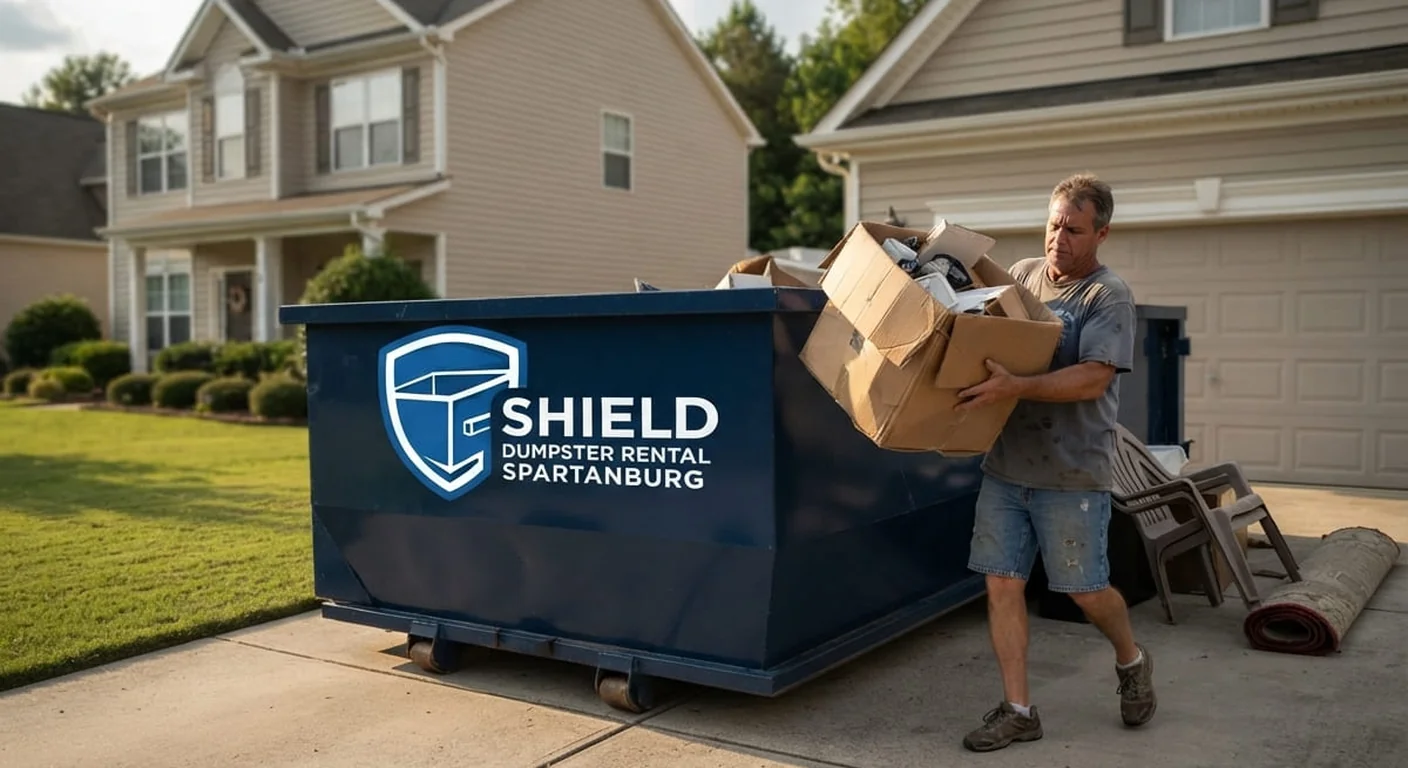
Clearing out a family home is never just a logistics job. It's boxes of photographs you didn't know existed, a grandmother's canning jars still lined up in the pantry, and a workshop in the outbuilding that hasn't been touched since your father last used it. We've rolled dumpsters into driveways all over Spartanburg County for families doing exactly this, and the ones who come out the other side feeling okay about it — not just exhausted — are almost always the ones who had a plan before the first box got opened. This checklist is the plan we walk our own customers through, built around how homes in this part of the Upstate actually get filled up over the decades.
Start Before You Book: Sort First, Size Second
The single biggest mistake we see is ordering a dumpster on day one and starting to fill it before anyone has walked the whole property. Once a roll-off is sitting in the driveway, it's tempting to toss anything unclear into it just to make progress, and that's how family keepsakes end up buried under a torn-up recliner. Give yourself at least a day, ideally a weekend, to walk every room, closet, attic space, and outbuilding first and get a rough sense of scale before you call us to size a dumpster.
Set Up Three Zones
However many people are helping, agree on three physical zones before anyone touches a drawer:
- Keep — items family members want, important documents, photos, and anything of real or sentimental value that needs a decision later, not a hallway pile.
- Donate — furniture, housewares, clothing, and working small appliances in decent condition that a local donation center can put back into use.
- Dispose — broken, worn-out, or unsellable items headed for the dumpster, plus a fourth mental category for anything hazardous that needs its own separate trip.
Label boxes and staging areas clearly, because a house full of relatives and helpers moves fast, and the fastest way to lose track of an estate is to let "not sure yet" pile up in every room at once. Decide who has final say on sentimental items before you start, so nobody is making that call alone in the moment.
Old Mill-Village Homes Bring Their Own Set of Challenges
A lot of the estate cleanouts we handle are in Spartanburg's older mill-village neighborhoods — Drayton, Whitney, Beaumont, Saxon, Arcadia, Fairforest — bungalows and cottages built for generations of textile workers and often lived in by one family for fifty or sixty years. These homes tend to have three spaces that catch people off guard: the attic, the basement or crawlspace storage area, and a detached garage or shed out back. Each one accumulates differently, and each one needs its own approach.
Attics
Older attics in these bungalows often have limited flooring, low headroom, and insulation that's been disturbed by decades of storage. Heat builds up fast in an Upstate summer, so tackle attic work in the early morning if you're clearing one out between May and September. Christmas decorations, luggage, and boxed linens are common finds, along with the occasional surprise — old furniture pieces, trunks, or tools set aside and forgotten.
Basements and Crawlspace Storage
Basements in this part of the Piedmont deal with humidity, and anything stored there for years — cardboard boxes, fabric, paper — may have taken on moisture damage or mustiness that makes the donate-versus-dispose decision easy. Wear a mask and gloves when you're moving boxes that have sat in a damp basement for a long time.
Outbuildings, Garages, and Sheds
Detached garages and backyard sheds on these older lots are where hazardous materials tend to hide: half-used paint cans, old motor oil, solvents, and sometimes a forgotten propane tank from a grill that hasn't been used in years. Walk the outbuildings early in the process specifically to flag anything hazardous, since those items need to come out on their own track, not into the dumpster with everything else.
What Belongs in the Dumpster — and What Needs a Separate Path
A roll-off dumpster is the right tool for the bulk of an estate cleanout: old furniture, mattresses, worn carpet and flooring, broken shelving, general household clutter, and yard debris cleared from around the property. But three categories need to be pulled out and handled differently before anything goes in the container.
| Item Type | Best Path | Why |
|---|---|---|
| Furniture, mattresses, household clutter, worn flooring, yard debris | Dumpster | Bulky, non-hazardous, and exactly what a roll-off is built for |
| Working furniture, housewares, clothing, small appliances | Donate | Still useful — a local donation center gives these a second life instead of landfill space |
| Paint, solvents, oils, pesticides, batteries, propane tanks | Hazardous disposal | Prohibited in the dumpster and require a dedicated household hazardous waste drop-off |
| TVs, computers, small electronics | Electronics recycling | Often contain components that shouldn't go to a landfill, and many are recyclable |
| Medical waste, tires | Specialty disposal | Not accepted in roll-off dumpsters under any circumstances |
Hazardous Materials Need Their Own Trip
Paint cans, solvents, motor oil, pesticides, batteries, propane tanks or gas cylinders, and any hazardous chemicals cannot go into our dumpsters, and that's a firm line, not a preference. The good news is these items are usually a small fraction of an estate cleanout by volume, even if they feel like a hassle. Set them aside in a single, clearly marked area of the garage as soon as you find them, and check with the South Carolina Department of Environmental Services (SCDES) or the City of Spartanburg for the current household hazardous waste collection options in the area before your rental period ends.
Electronics Deserve a Second Look
Small appliances in working order can go in the dumpster, but older TVs, desktop computers, and other electronics are worth routing to a dedicated electronics recycling option instead. Many contain materials that are better recycled than landfilled, and it's a small extra step that makes a real difference across a whole estate's worth of accumulated electronics.
Donations Keep Good Items in Use
Furniture, dishware, linens, tools, and clothing that are still in solid condition don't have to end their story in a landfill. National donation networks like Goodwill and Habitat for Humanity ReStore accept exactly these kinds of household items and often offer pickup for larger furniture pieces, which can save you a separate haul. Setting aside a donate pile early, before the dumpster fills up, is the easiest way to make sure good items actually make it out the door instead of getting swept into the "just get rid of it" pile on a tired afternoon.
Pacing the Work Over Your Standard 7-Day Rental
Our rentals run on a standard 7-day period, and estate cleanouts are one of the jobs where that full week really earns its keep. Trying to clear an entire house in a weekend usually means rushed decisions on sentimental items and injuries from moving heavy furniture too fast. Here's how we suggest families spread the work.
Days 1–2: Walk, Sort, and Flag
Walk every room, the attic, basement, and any outbuildings. Set up your keep, donate, and dispose zones. Flag hazardous items in one spot without moving them into the dumpster. This is also the right time to pull out documents, photos, and anything that needs a family decision rather than a fast one.
Days 3–4: Fill the Dumpster with the Easy Calls
Start loading the dumpster with the items everyone already agrees on — worn furniture, broken items, general clutter, and yard debris. This is usually the bulk of the volume and the fastest section of the whole job once the sorting is already done.
Days 5–6: Handle the Harder Rooms
Attics and basements take longer per square foot than living spaces, so give them dedicated time rather than trying to squeeze them in around everything else. This is also when donation pickups or drop-offs typically happen, once you know exactly what's in that pile.
Day 7: Final Walkthrough
Do one more pass through every room before pickup. Check that contents in the dumpster stay below the top rim — that's the line our driver needs for a safe pickup — and confirm hazardous materials and electronics have already left the property through their own channels. If you need more time, extensions are available on request; just call us before the rental period ends.
Choosing the Right Size for the Job
Estate cleanouts vary enormously by house size and how many decades of accumulation are involved, which is exactly why we size these by phone rather than by a one-size-fits-all rule. A smaller bungalow cleanout in one of the older mill villages might only need a mid-size container, while a larger property with a full basement and a garage full of tools can fill something considerably bigger. Our dumpster size guide breaks down what each roll-off size typically holds, and our guide on what size dumpster you need walks through the general math. When in doubt, call us and describe the house — number of rooms, whether there's a basement or outbuildings involved — and we'll size it right the first time so you're not paying for a second delivery.
Permits and Placement
If the dumpster is going on your own driveway or another private part of the property, no permit is needed. Placement on a public street is a different story, and depending on the location that may call for a temporary permit from the City of Spartanburg or your county or town. Our guide to dumpster permits in Spartanburg covers what to check before delivery day, and it's worth confirming with your local municipality if street placement is your only option.
Estate cleanouts are hard work, done under harder circumstances, and we try to make the dumpster part of it the one piece that goes smoothly. Our flat rate covers delivery, pickup, and disposal with no hidden fees, so there's nothing extra to think about once the container is in place. Call us at (864) 754-6073 and we'll help you size the job right and get a dumpster on your schedule, not the other way around. You can also read more about how we approach these projects on our estate cleanout services page, or browse our whole-home cleanout weekend plan if you're working with a tighter timeline. We serve Spartanburg and the surrounding Upstate — see our full service area for the towns we reach.
Need a container in Spartanburg or anywhere in Spartanburg County? Call (864) 754-6073 and describe the job. We will name the size, the flat rate and a delivery slot — often the same day. No forms, no waiting on an email.