Rules & Disposal
Spartanburg Recycling & Disposal Guide
Where to take hazardous waste, e-waste, appliances, tires and batteries in Spartanburg County when they can't go in your roll-off.
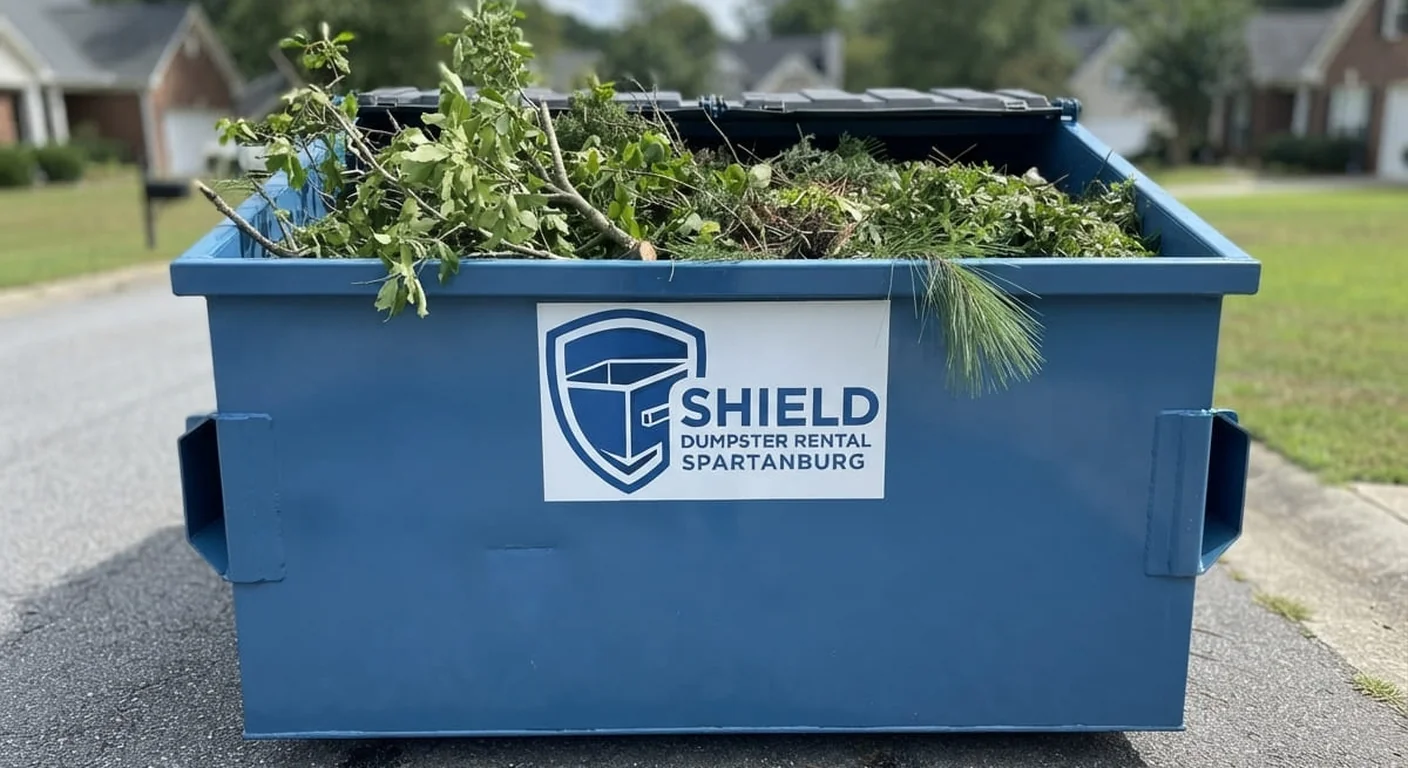
Every week our drivers pull up to a driveway in Spartanburg and find a pile next to the dumpster that just cannot go in with the rest of the load: a couple of half-full paint cans, an old console TV, a dead car battery, a stack of tires from the garage. We get it — when you're clearing out a house or wrapping up a job site, everything looks like it belongs in the same pile. It doesn't, and it's not just a rule for the sake of a rule. Paint, electronics, refrigerants, tires and batteries all need to be handled through specific recycling or hazardous-waste channels, both for safety and because South Carolina law treats them differently than ordinary construction debris and household junk.
This guide walks through the items we're asked about most, and points you to the right place to take them. We're not going to invent addresses or hours for you — drop-off programs, collection events and accepted-item lists change, so we'll tell you generally how each stream is handled and send you to the City of Spartanburg, Spartanburg County, and the South Carolina Department of Environmental Services (SCDES) to confirm what's current before you load up the truck.
Why These Items Skip the Roll-Off
Our residential dumpsters and commercial dumpsters are built for the bulk of a cleanout or a job site — wood, drywall, flooring, furniture, shingles, yard debris, general clutter. What they're not built for is anything that can leak, ignite, off-gas, or contaminate a landfill cell: paints and solvents, fuels and oils, propane cylinders, tires, batteries, and most electronics and major appliances. Those materials are regulated separately under state and federal rules, and mixing them into a roll-off creates real risk for our driver, for the landfill, and for whoever handles the container after it leaves your property. If you've read our piece on what can and can't go in a dumpster in South Carolina, this guide is the natural next step — it's about where the "can't" pile actually needs to go instead of just where it can't go.
Household Hazardous Waste
Household hazardous waste (HHW) covers the things sitting on a shelf in the garage or under the kitchen sink that you'd never want to see stacked in a dumpster: leftover paint and paint thinner, stains and varnishes, pesticides and herbicides, pool chemicals, motor oil and automotive fluids, propane tanks and gas cylinders, old cleaning chemicals, and anything else marked flammable, corrosive, or toxic. These materials are excluded from ordinary landfill disposal because they can react, leak, or contaminate groundwater.
Spartanburg County runs household hazardous waste collection as part of its solid waste and recycling programs, and the City of Spartanburg's public works pages cover what falls under city versus county responsibility for residents inside city limits. Because collection days, drop-off locations and accepted-item lists shift over time, the right move is to check the Spartanburg County website directly, or the City of Spartanburg site if you're inside city limits, before you load anything up. For statewide rules on how hazardous waste is classified and managed in South Carolina, SCDES is the authority — you can review their guidance at des.sc.gov.
One practical tip from our crews: never let paint cans, solvent containers or propane cylinders ride along in a roll-off "just this once." A single leaking can is enough to contaminate an entire load, and it's one of the fastest ways a job site cleanup turns into an expensive delay.
Electronics (E-Waste)
Old televisions, desktop computers, monitors, printers, and other electronics are grouped as e-waste because many of them contain materials — leaded glass in older CRT screens, circuit board components, batteries built into laptops and cordless tools — that need to be processed through dedicated electronics recycling rather than sent to a landfill. South Carolina has taken e-waste seriously for years, and both the county and state maintain guidance on how residents should handle it.
Spartanburg County's recycling program is the place to start for e-waste drop-off options, and SCDES publishes statewide direction on electronics recycling as part of its solid waste program. As always, confirm current accepted items and any drop-off details directly with Spartanburg County or SCDES before you make a trip. If you're clearing out an office as part of a larger project, our commercial dumpster rental handles the desks, shelving, and general office debris — just pull the electronics aside first.
Appliances and White Goods (Freon Reclamation)
Refrigerators, freezers, window air conditioners, and dehumidifiers fall into their own category because many of them contain refrigerant — commonly still called by the trade name Freon — that is regulated under federal air quality rules. Refrigerant has to be professionally recovered before the appliance itself is scrapped or recycled; it cannot legally be vented into the air, and it cannot go into a dumpster with the refrigerant still inside. This is true whether the appliance is heading to a landfill, a scrap metal recycler, or an appliance recycling program.
In practice, that means white goods with refrigerant need to go through a channel that can certify Freon reclamation — often a scrap metal recycler equipped to handle it, or a county-coordinated appliance recycling program. Smaller appliances without refrigerant — microwaves, toasters, small kitchen appliances — are generally handled differently and, depending on condition, sometimes fine in a roll-off alongside general clutter. Because the line between "needs reclamation first" and "fine to toss" comes down to whether the unit holds refrigerant, check with Spartanburg County on their current appliance recycling options, and lean on SCDES for the state-level rules if you want the full picture.
If you're doing a bigger cleanout that includes several appliances along with furniture, boxes and general household items, our estate cleanout and whole-home cleanout guides walk through how to stage that kind of job — pull the fridges and window units aside for proper handling, and let the roll-off take everything else.
Tires
Tires are one of the most common "can this go in?" questions we get, and the answer is always no — not in our dumpsters, and not in most landfill cells either. Whole tires trap air and gas over time, which makes them unstable in a landfill and a fire hazard when they do combust. South Carolina manages tire disposal through a dedicated recycling stream rather than ordinary solid waste disposal, and Spartanburg County participates in that system. If you've got a handful of old tires from the garage or a stack left behind on a property, check Spartanburg County's current guidance on tire drop-off, and use SCDES as the backstop for statewide tire recycling rules. Many tire retailers also accept old tires when you buy replacements, which is often the simplest option if you're not dealing with a large quantity.
Batteries
Batteries split into a few different categories, and each one has its own handling path. Car and truck batteries are lead-acid batteries — highly recyclable, and most auto parts stores and mechanics will take a used battery, often crediting you when you buy a replacement. Household alkaline batteries (the AA/AAA/9-volt type) are lower-risk but still shouldn't be tossed loose into a roll-off in bulk. Rechargeable batteries — the lithium-ion and nickel-cadmium batteries inside laptops, power tools, and cordless devices — are the ones that require the most care, since damaged rechargeable batteries can short and start fires, including inside a dumpster or collection truck.
For all battery types, check with Spartanburg County on current battery recycling drop-off options, and treat any battery-powered tool or device with a swollen, damaged, or leaking battery as hazardous material rather than ordinary trash. SCDES's statewide guidance at des.sc.gov covers how these materials are classified if you want more detail.
Quick Reference: Where It Goes
| Item Type | Where It Goes |
|---|---|
| Paint, solvents, pool chemicals, propane tanks | Household hazardous waste program — confirm current options with Spartanburg County or the City of Spartanburg |
| TVs, computers, monitors, printers | Electronics (e-waste) recycling — check Spartanburg County's recycling program |
| Refrigerators, freezers, window A/C units | Appliance recycling with certified Freon reclamation — not a roll-off, not curbside trash |
| Small appliances without refrigerant | Often fine for general disposal, depending on condition — confirm if unsure |
| Whole tires | Tire recycling stream — check county guidance or ask a tire retailer |
| Car/lead-acid batteries | Auto parts stores, mechanics, or battery recycling — never in a dumpster |
| Rechargeable (lithium-ion) batteries | Dedicated battery recycling — handle as hazardous if damaged or swollen |
| Wood, drywall, flooring, furniture, shingles, yard debris | Goes right in your Shield roll-off dumpster |
Confirm Before You Haul
We're not going to point you to a specific drop-off address or a set of hours in this guide, because those details change — programs get updated, collection events are seasonal, and accepted-item lists get revised. The reliable move is to check directly with the source before you load the truck:
- For city-side questions and programs inside Spartanburg city limits, start with the City of Spartanburg website.
- For county-wide recycling, hazardous waste, e-waste, appliance and tire programs, start with Spartanburg County.
- For statewide rules on how these materials are classified and managed in South Carolina, use SCDES at des.sc.gov.
A five-minute check before you load the truck saves a wasted trip and keeps you on the right side of how these materials are supposed to be handled.
What Shield's Dumpster Is Still Great For
None of this changes what a roll-off from Shield is for. Once the hazardous waste, electronics, appliances, tires and batteries are pulled aside and routed the right way, everything else from a cleanout or job — wood, drywall, tile, flooring, furniture, household clutter, yard clippings and branches, roofing shingles, and small appliances without refrigerant — goes straight into your dumpster. We deliver, you fill it at your own pace over your rental period, and we haul it away with one flat rate covering delivery, pickup and disposal. Check our size guide if you're not sure what you need, browse our full services list, or see if we're already working in your area on the service area page.
If you're planning a bigger cleanout and want to talk through what goes in the dumpster versus what needs a separate trip, call us at (864) 754-6073 and we'll walk through it with you before we ever drop off a container. You can also reach us anytime through our contact page. And if the job includes seasonal yard debris on top of everything else, our Upstate SC seasonal cleanup guide covers that side of things too.
Need a container in Spartanburg or anywhere in Spartanburg County? Call (864) 754-6073 and describe the job. We will name the size, the flat rate and a delivery slot — often the same day. No forms, no waiting on an email.